
March 2026. Once again, the country’s political stage presents the same old picture: corruption, violence, authoritarianism. It feels as though nothing has changed. In fact, the darkness seems to have deepened. The BNP, born in the cantonment under Ziaur Rahman and whose politics began hand in hand with corruption and violence, continues to walk the same path. Only the name has changed. Now they call themselves the “Council of Ministers.” But it is a name only. Their methods, their behavior, their politics, none of it has changed.
The incident in Rangpur is just one example. A top leader of Jubo Dal, Akibul Rahman Monu, is seen entering the office of a cable and internet official and threatening to shoot his wife and children. In the video, his agitated voice, obscene language and intimidation make one thing clear: this party’s politics has sunk to a disturbing low. They do not practice politics. They practice extortion, intimidation and gun violence. For them, politics means shaking down vendors on the sidewalks and engaging in thuggery at night. Poverty is not shameful, but oppression is. And oppression is their primary weapon.
But the question remains: does the country not have a Home Minister? What exactly do they do? After every incident, the media is blamed and the police are told to file reports. The media’s job is to report the news, but what is the job of the police? Is it simply to record reports and do nothing more? Or are they themselves part of this climate of terror? If the law enforcement agencies remain silent, where are ordinary citizens supposed to turn?
Bangladesh now feels like a dumping ground for rapists, killers, thugs, gangsters, terrorists, extremists, frauds and mob agitators. Religion, politics and society have all been tainted by them. Organizations like Jubo Dal, which should have guided the country’s youth in a positive direction, have instead become symbols of violence. In a time of global crisis, they should have been doing something for the country. Instead, they are doing the opposite. Is this politics? No. This is terror.
The people of the country no longer want to tolerate it. They want to resist. But where is the path of resistance? When political parties themselves are corrupt, when law enforcement agencies remain silent, what options are left for ordinary citizens?
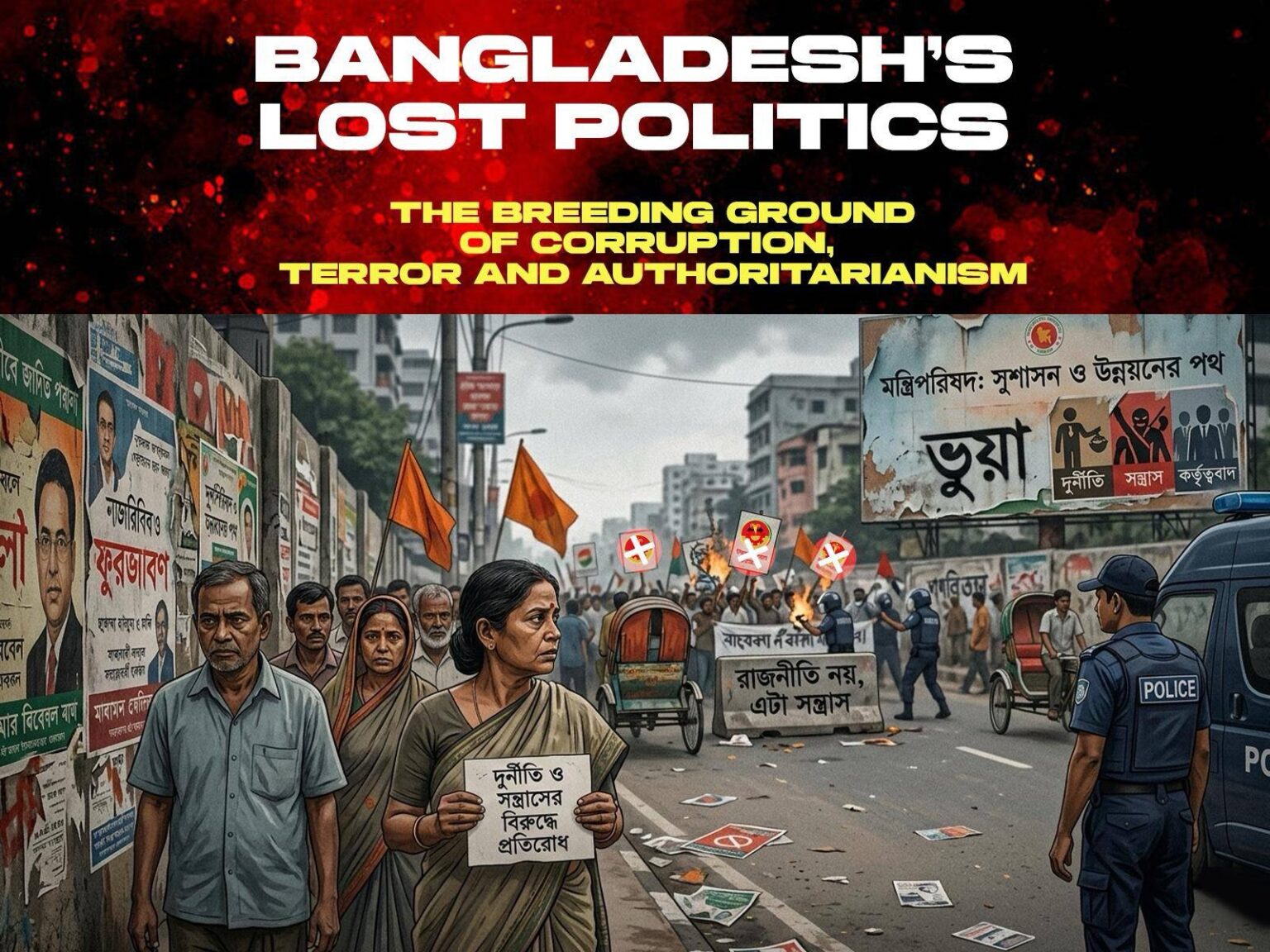
[Bangladesh’s Lost Politics: The Breeding Ground of Corruption, Terror and Authoritarianism]
Over the past 18 to 19 months, politics in the country has reached a point where public trust has eroded. People no longer believe in any party or leader who has been active during this period. Because those now engaged in politics all seem the same. All corrupt. All complicit in violence.