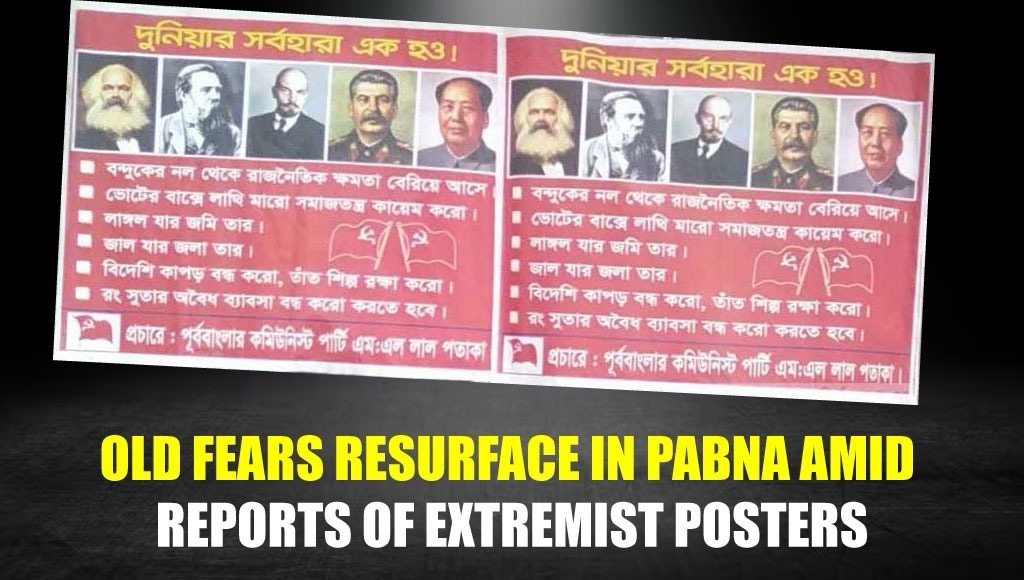

Residents of Pabna are expressing alarm after posters linked to banned extremist groups appeared in parts of the district, reviving memories of past violence and bloodshed. However, there has been little public response from the current administration, raising questions about the government’s handling of security issues.
The current government, which came to power following the 12 February elections that were boycotted by several major political parties, has faced criticism over its legitimacy. Observers say the administration’s relative silence on security matters has added to public unease.
The Bangladesh Nationalist Party (BNP) has long faced scrutiny over its historical origins, including its ties to military leadership under Ziaur Rahman. Critics argue that under its leadership, concerns about the country’s security framework are resurfacing, particularly in light of extremist messaging appearing in Pabna.
Concerns have also been raised about unrest last July, during which several convicted militants and serious offenders reportedly escaped from prisons amid violent clashes with law enforcement. Their current whereabouts remain unknown, and opposition voices say the government has yet to provide adequate explanations.
Analysts note that extremist groups were largely inactive during the Awami League’s tenure, with many members surrendering and networks weakening. However, they warn that political instability and weak governance could allow such groups to re-emerge. The recent posters in Pabna are being seen by some as an early warning of this trend.
At the same time, critics allege that members of the ruling party have focused more on consolidating power, with accusations of corruption, extortion, and local-level conflicts contributing to a decline in law and order.
[Old fears resurface in Pabna amid reports of extremist posters]
Local business owners have voiced concerns about safety, emphasizing that their fears are based on lived experience rather than speculation. Despite police removing the posters and issuing statements, many residents feel the response has been insufficient to restore public confidence.
Questions are also being raised about how effectively a government with legitimacy concerns can address security challenges. Analysts suggest that the lack of transparency in how the government came to power may be reflected in broader governance issues.
For many observers, the situation in Pabna is not an isolated incident but a symptom of wider challenges facing the country.