
Where else will you find such a stark example of using Islam for political gain? One of the things Bangladesh Jamaat-e-Islami has long been adept at is advancing its interests under the cover of religion. What happened in Badarganj, Rangpur, is not an isolated incident—it reflects a broader pattern.
Claiming the government stipend meant for an imam of a mosque where you neither lead prayers nor are accepted by the congregation is not just corruption—it is a textbook case of looting state resources by exploiting religious identity. When Jamaat secretary Nayan Mia inserted his own name into the list of imams, he didn’t just deprive a poor religious scholar of his rightful dues; he also committed fraud against the state. The audacity required to carry out both acts simultaneously does not emerge overnight. It comes when a group begins to feel shielded by power, beyond accountability.
Now, turning to Bangladesh Nationalist Party (BNP). Referring to the 12 February vote that brought them to power as an “election” arguably diminishes the meaning of the word itself. Major political parties were absent, public participation was minimal, and the process of power transfer does not align with any standard definition of democracy. A party born in a military barracks—established by Ziaur Rahman as a tool to consolidate power—now speaks of “restoring democracy.” The irony is difficult to ignore.
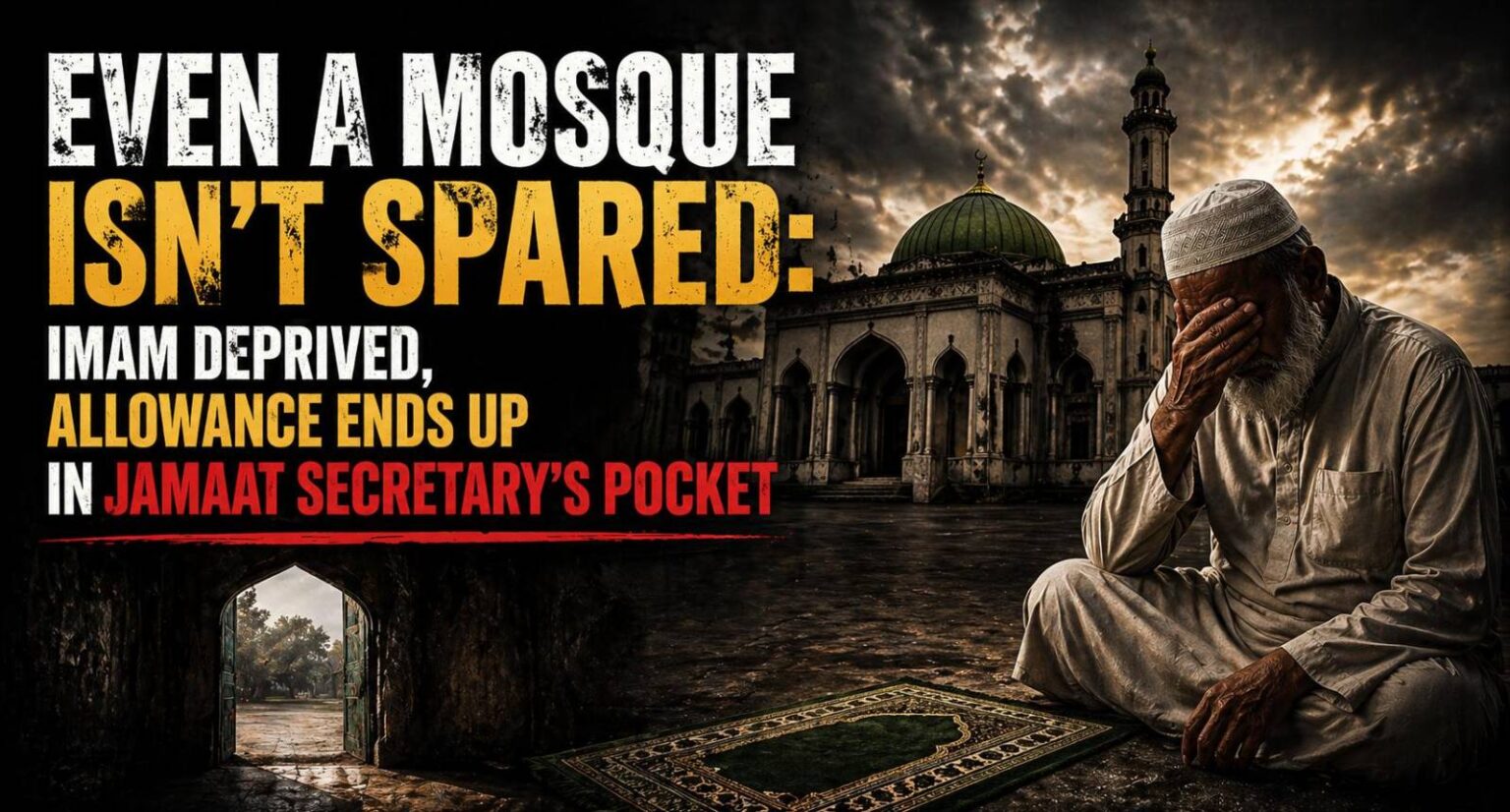
[Even A Mosque Isn’t Spared: Imam Deprived, Allowance Ends Up in Jamaat Secretary’s Pocket]
Historically, when BNP and Jamaat align, the outcome has proven toxic for Bangladesh. On one side is an organization accused of crimes against humanity during the Liberation War; on the other, a party with a long record of corruption and political violence—realities experienced firsthand by the people of the country. When these two forces assume state power through a disputed electoral process, the theft of a mosque imam’s allowance in Badarganj becomes a minor headline—just one fragment of a much larger picture.
And to those who dismiss such incidents with a smile as “justice being served,” there is only one thing to say: a poor imam, who has served his mosque since its founding, has been stripped even of the modest recognition the state intended to provide—simply through the misuse of political identity. If anyone considers this act consistent with Islam, then there is little room for meaningful dialogue about their understanding of the faith.