
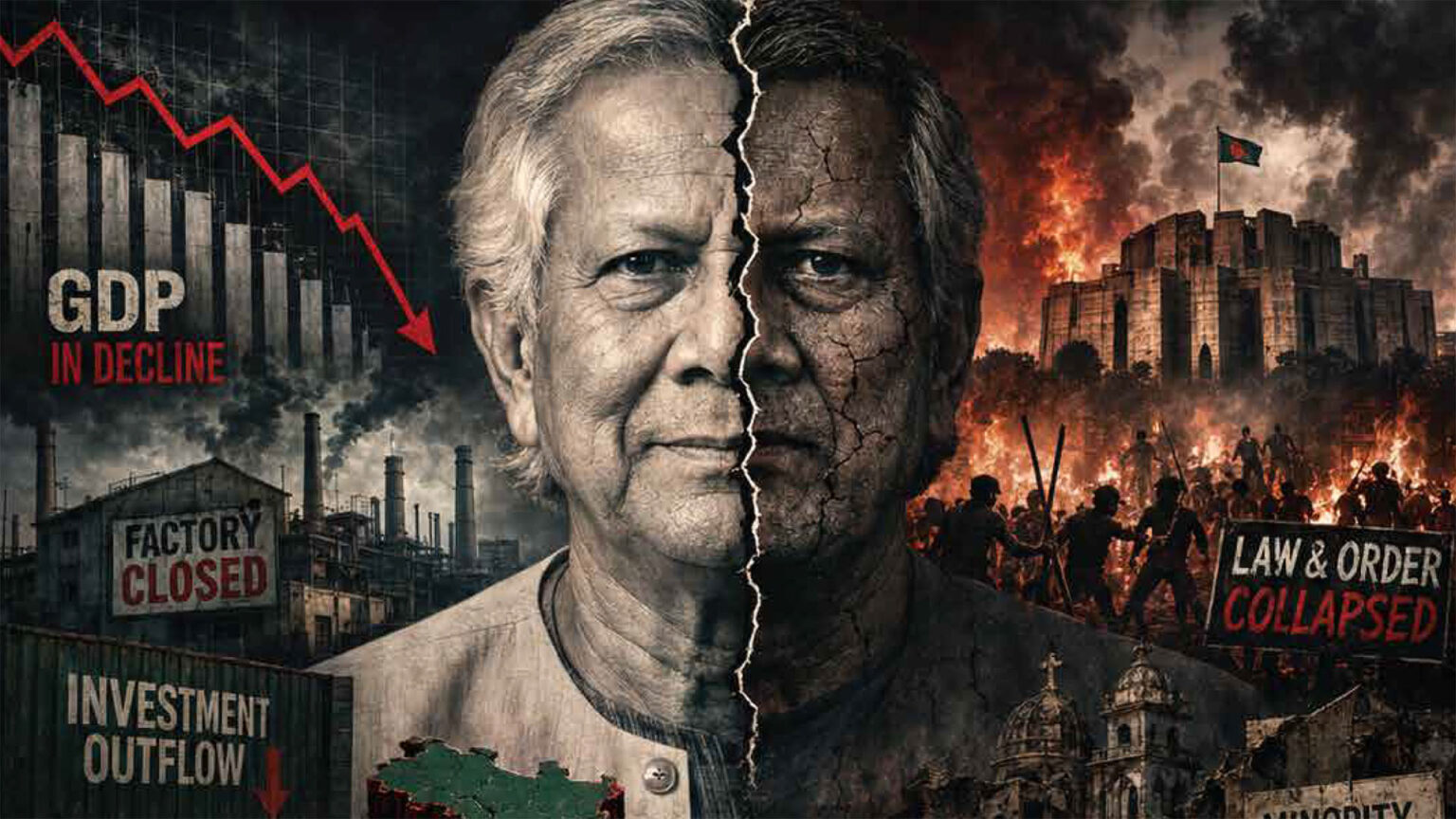

From Nobel laurels to a legacy of institutional collapse, the interim experiment in Dhaka has proven to be the most expensive failure in the nation’s 54-year history.
In the turbulent history of Bangladesh, few figures have ascended to power with as much international acclaim as Muhammad Yunus. A Nobel Peace Prize laureate celebrated for microfinance, he was thrust into leadership of the interim government in August 2024 following the ouster of Sheikh Hasina. Expectations were sky-high: a neutral technocrat who would stabilize the nation, restore order, deliver reforms, and steer the economy toward recovery.
Eighteen months later, as Yunus stepped down in early 2026, the verdict from critics, data, and many Bangladeshis is damning. Far from a savior, Yunus presided over one of the most unqualified and ineffective administrations in the country’s history. Economic indicators plummeted, law and order fractured, corruption allegations swirled around his inner circle, and the promise of a “new Bangladesh” dissolved into anarchy, stagnation, and dashed hopes. Bangladesh was left in ruins, poorer, more divided, and more insecure.
Read more from the documents below: