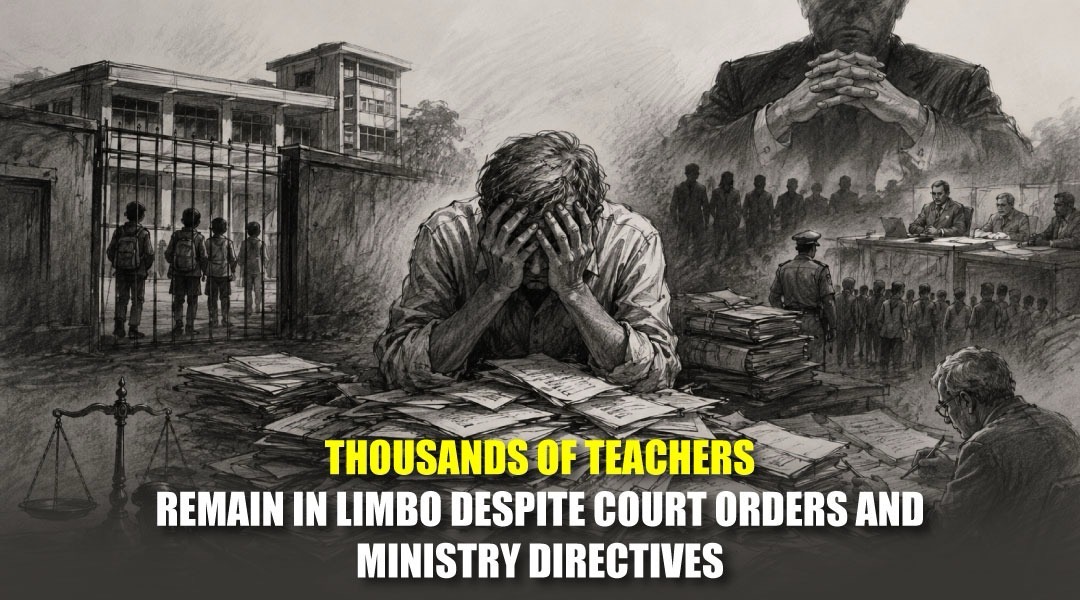

More than 3,500 teachers across Bangladesh remain out of classrooms, many without salaries for nearly two years. Although court rulings and directives from the Ministry of Education have called for their reinstatement, many schools have yet to allow them to return.
The issue has raised questions about the effectiveness of administrative decisions and the state’s ability to enforce them. In comments reported by local media, the Director General of the Directorate of Secondary and Higher Education (DSHE) acknowledged the challenges, stating that authorities were unable to “manage local actors” in some cases.
One of those affected is Anwarul Islam Talukdar from Dhamrai, who is credited with revitalising a struggling school and leading it to become one of the top-performing institutions in his upazila. A two-time recipient of the Best Head Teacher award, he says he was pressured to resign in August 2024 following the political unrest that accompanied the July protests.
According to his account, members of the school’s governing body demanded his resignation. Since leaving his post, he says he has been without a salary, has sold personal property to survive, and has struggled to find employment due to his age.
Similar accounts have emerged from other parts of the country. Abdul Qadir, a teacher from Kulaura, says he was dismissed despite serving under school administrations led by individuals with differing political affiliations. He says he has received favourable decisions from both the Education Ministry and the courts but remains unable to return to work.
At Dhaka’s Vikarunnisa Noon School and College, teacher Keka Roy Chowdhury reportedly received a ministry directive supporting her reinstatement earlier this year. However, she says the institution’s current governing board has yet to implement the order, leaving her without a salary for nearly two years.
The issue extends beyond schools. At Dhaka University, around 70 teachers are reportedly still unable to resume teaching duties. A fact-finding committee was established to examine the matter, but only a small number of reports have been submitted so far.
[Thousands of Teachers Remain in Limbo Despite Court Orders and Ministry Directives]
Professor Zinat Huda has argued that disciplinary procedures outlined in the university’s governing regulations were not properly followed and that some teachers were removed before allegations against them had been proven. She also warned that the loss of experienced faculty members could have a lasting impact on academic standards and teaching quality.
Reports suggest that nearly 6,000 teachers nationwide were removed from their positions following the political changes of August 2024. According to figures cited by affected groups, six teachers have since died and hundreds have experienced serious health problems.
While some allegations of misconduct against dismissed teachers may warrant investigation, critics argue that due process must be followed. They contend that removal through public pressure or mob action undermines legal and institutional safeguards.
Although approximately 2,500 teachers have reportedly managed to return to their posts through various legal and administrative channels, thousands of others remain excluded. For many, official letters, ministry directives, and court orders have yet to translate into practical outcomes.
As the debate continues, the cases highlight broader questions about governance, accountability, and the implementation of legal decisions in Bangladesh’s education sector.