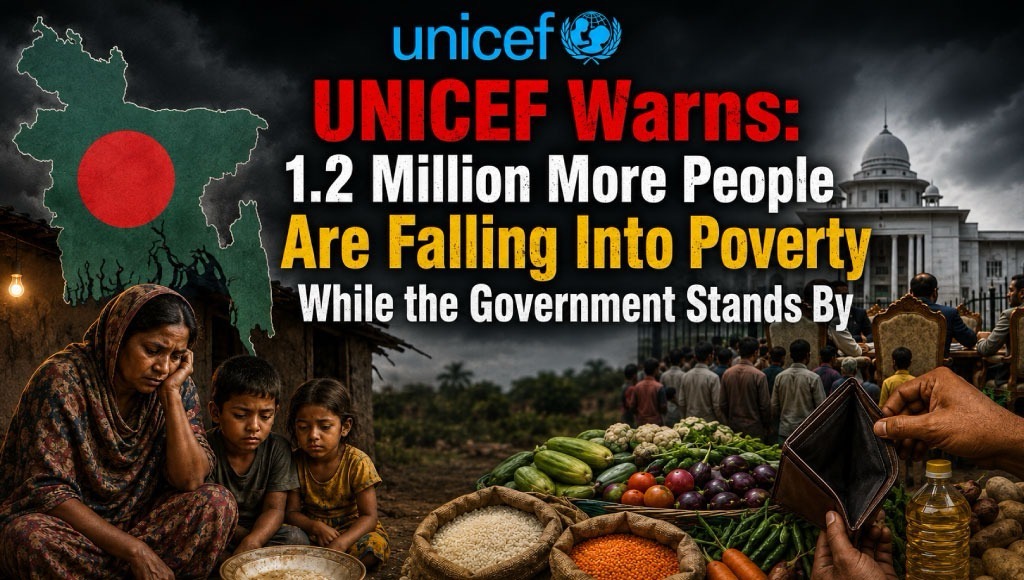

UNICEF’s alarming findings paint a stark picture of Bangladesh’s cost-of-living crisis, where the soaring prices of essential goods have turned the marketplace into a daily struggle for survival. Families can no longer afford basic necessities. Buying rice means going without lentils, and purchasing cooking oil often leaves no money for vegetables. Low-income households are bearing the brunt of this hardship, with children going to bed hungry every night. UNICEF has warned that an additional 1.2 million people are falling below the poverty line. The question is: what is the BNP-Jamaat government doing to prevent this decline?
The unchecked rise in fuel prices and transportation costs has pushed up the prices of everything from edible oil to fish and poultry. This inflation did not emerge on its own. It is being driven by policy failures and entrenched corruption, which have pushed living costs to unprecedented levels. During the BNP-Jamaat coalition government of 2001-2006, despite claims of food self-sufficiency, artificial rice shortages were allegedly created, benefiting mill owners. Has this coalition learned anything from history? UNICEF’s findings, according to the article, provide a stark answer.
UNICEF Executive Director Catherine Russell’s warning is becoming a reality in Bangladesh. Driven by economic hardship, many parents are struggling not only to provide nutritious food but even enough rice for their children. A generation of children suffering from hunger and malnutrition today faces long-term physical and cognitive setbacks that may never be fully reversed. While the country’s future is being jeopardized, the article questions what is taking place behind the closed doors of the BNP-Jamaat government, alleging that power-sharing and recovering political interests have taken precedence over addressing the crisis.
[UNICEF Warns: 1.2 Million More People Are Falling Into Poverty While the Government Stands By]
UNICEF has urged the government to shift resources away from wasteful spending and instead invest in healthcare, education, stronger social protection programs, and expanded cash assistance. According to the article, however, the reality is the opposite. It argues that the government’s budget has reduced support for ordinary people while continuing to favor vested interests. As a result, the cries of 1.2 million newly impoverished people appear to go unheard. The article concludes by drawing parallels with the 2001-2006 period, arguing that as public suffering deepens, those in power become more entrenched, and questioning how long the country can remain a silent witness as years of development are undermined by what it describes as misrule.